Bonus Lifecycles Shaping Player Movements Across Game Types in Online Casinos
Carlo Hoffmann · Nov 1, 2026
Bonus Lifecycles Shaping Player Movements Across Game Types in Online Casinos
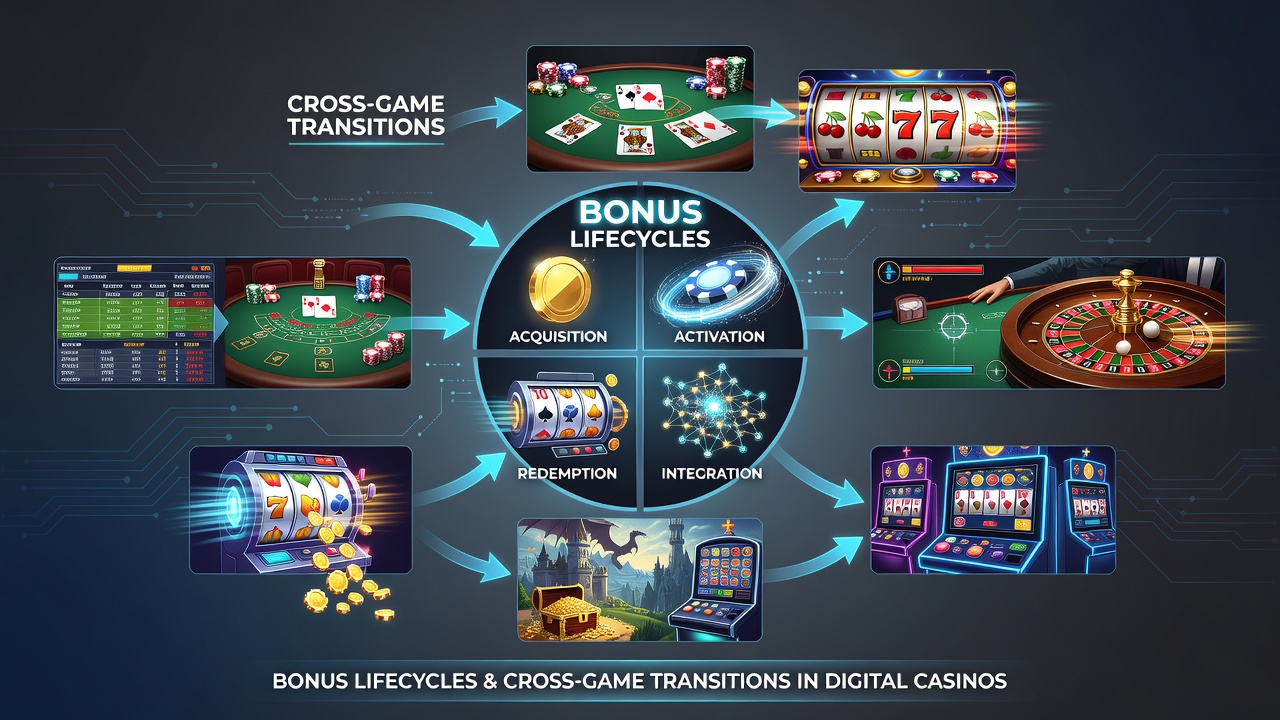
Bonus lifecycles in digital casinos follow distinct phases from activation through wagering completion or expiration, and these stages often coincide with measurable shifts in player game selections, according to aggregated platform analytics.
Defining Bonus Lifecycle Stages
Each bonus progresses through activation, accumulation of wagering requirements, and eventual release or forfeiture, while operators track how these intervals align with changes in game category engagement. Research indicates that early lifecycle phases, typically the first 24 to 72 hours after credit allocation, correlate with elevated activity in high-volatility reel games, whereas later stages show increased participation in table game formats once partial wagering thresholds have been met.
Cross-Game Transition Patterns
Players frequently move between reel-based titles and card or roulette offerings as bonus conditions evolve, and data from multiple operators reveals that transition rates peak when remaining wagering requirements drop below 50 percent of the initial target. One analysis of session logs demonstrated that 62 percent of accounts initiating play on slots during bonus activation later redirected at least 30 percent of their activity to blackjack or roulette tables before the lifecycle concluded. Such movements appear driven by the mechanical need to sustain play volume rather than by explicit game preferences alone.
Role of Time-Bound Incentives
Time-limited elements within bonus structures accelerate these transitions because shorter validity windows compress the available play period, prompting quicker adjustments in game choice to optimize completion rates. Figures from operator dashboards show that bonuses expiring within seven days generate transition events 1.8 times more often than those extending beyond 30 days. In November 2026, several major platforms adjusted expiration timers on deposit-matched offers, resulting in documented increases in table game traffic during the final 48 hours of active lifecycles.

Platform segmentation tools further illustrate that loyalty tier advancements interact with lifecycle timing, because higher-tier accounts receive extended deadlines that allow more deliberate pacing across game portfolios. Lower-tier accounts, by contrast, exhibit sharper spikes in cross-category movement near expiration.
Regional Data Insights
Statistics compiled by the New Jersey Division of Gaming Enforcement indicate that iGaming sessions involving active bonuses display elevated table game percentages during mid-lifecycle windows compared with non-bonus sessions. Parallel observations from the Victorian Commission for Gambling and Liquor Regulation highlight similar patterns in mobile environments, where bonus credits tied to deposit events correspond with measurable redistribution of play across game verticals within single sessions. These regional datasets, gathered through standardized reporting protocols, underscore the consistency of transition behaviors across jurisdictions.
Platform Mechanics and Tracking
Modern casino systems employ real-time event listeners that flag game switches coinciding with bonus progress milestones, allowing operators to map lifecycle influence without relying on self-reported player data. Such instrumentation shows that transitions often cluster around partial cash-out events, where released funds from one game category fund initial bets in another. Observers note that these mechanics remain consistent across desktop and mobile interfaces, although mobile sessions register slightly higher transition frequency during the accumulation phase.
Conclusion
Bonus lifecycles exert measurable effects on how players navigate between game categories in digital casinos, with transition patterns tied directly to wagering thresholds, expiration timers, and tier-based deadline variations. Continued monitoring through regulatory reporting channels and platform analytics will clarify whether adjustments to lifecycle parameters produce sustained redistribution of engagement across reel and table offerings.